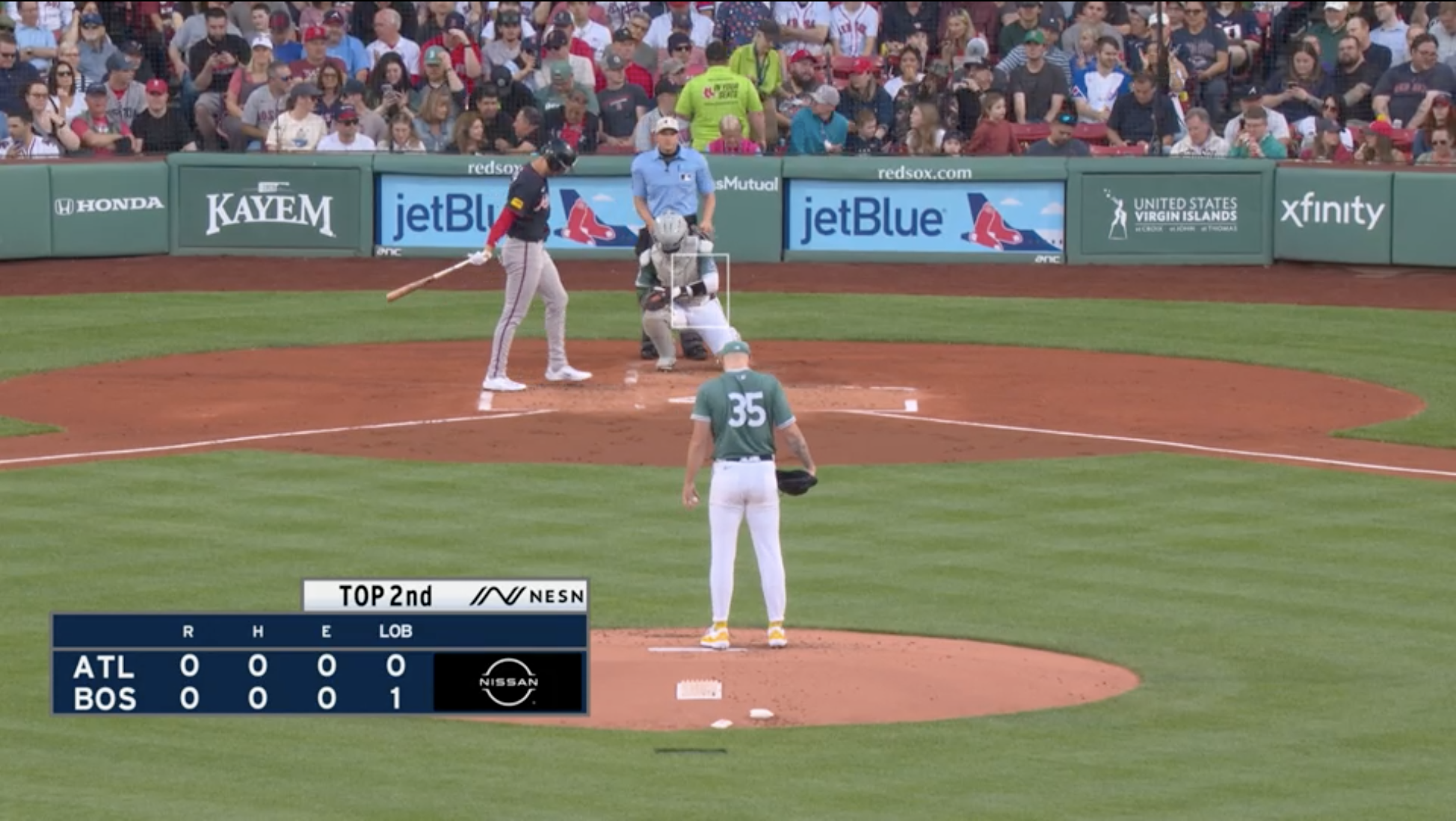
Garrett Crochet of the Boston Red Sox prepares to start the top of the second inning by pitching to Matt Olson of Atlanta.
The Top of the 2nd Begins
As the top of the second gets underway, both teams have had a chance to bat, and the game is well and truly underway— even if, as often happens, neither team got a baserunner, much less a run, during the first. The defense takes the field and starts going through the traditional warmups.
The vast majority of the time, the same pitcher who started the game for the home team will remain the game in the top of the 2nd— unless that starting pitcher either sustained an injury, or if they just didn’t have their best stuff that day, and ended up getting shelled. If a team has to unexpectedly dip into their bullpen during the first inning, it’s generally not good news for them, but fortunately, there’s still a lot of baseball yet to be played.
On the other hand, there are some strategies in which a team would expect to make a pitching change at this time. Sometimes, a team will start an “opener” rather than a starter. Here, the idea is that the starting pitcher will only pitch an inning or two, before turning the ball over to a “bulk pitcher,” who will be expected to pitch more deeply into the game1. Alternatively, a team might be in a spot where they don’t have someone available to take a full start, and so they will have a “bullpen game,” where they cycle through relief pitchers, in the hopes that each pitcher can provide 1-3 innings of serviceable pitching.
In any case, the pitcher who is in the game at this point takes their warmup pitches as the timer ticks down.
Meanwhile, the visiting team sends a batter up to the plate to lead off. This is usually the batter who was on deck at the end of the previous inning2, as it’s extremely uncommon for a position player to be pulled from the game after the first inning— again, unless an injury was involved.